


The Fascinating History of the Asiatic Society of Mumbai: From Colonial Knowledge Hub to Intellectual Powerhouse
- Marketing Küche7
- Aug 13, 2024
- 2 min read
The Beginnings of a Scholarly Tradition
Imagine stepping back in time to the early 19th century, when Sir James Mackintosh, a distinguished lawyer and jurist, founded the Literary Society of Bombay in 1804. Inspired by Sir William Jones' establishment of the Asiatic Society of Bengal two decades earlier, the Society aimed to promote "useful knowledge, particularly such as its now immediately connected with India." Its objective was to investigate and encourage Oriental Arts, Sciences and Literature. Can you picture the excitement of these early scholars as they embarked on their quest for knowledge?
A Growing Collection and Influence

As the years passed, the Society's library grew from the collections of the Medical and Literary Library, a private library founded in 1789. In 1826, the Literary Society merged with the Royal Society of Great Britain and Ireland as its Bombay Branch of the Royal Asiatic Society (BBRAS). Imagine the thrill of discovering new books and manuscripts as the collection expanded. Over the years, the Geographical Society of Bombay and the Anthropological Society of Bombay also merged with the BBRAS, further expanding its collections and influence. Can you envision the wealth of knowledge that was amassed under one roof?
Scholarly Contributions and Publications
In 1841, the Society began publishing a journal titled Journal of the Bombay Branch of the Royal Asiatic Society, which continues to this day under the name Journal of the Asiatic Society of Mumbai. That same year, the Society started admitting Indians as members, a significant step in its evolution. The Society's early years saw contributions from administrators, jurists, educationists, missionaries, and scholars who were influential in the Indian renaissance and public life. Imagine the lively discussions and debates that took place within the Society's walls as these diverse minds came together.
A Heritage Building and Its Surroundings

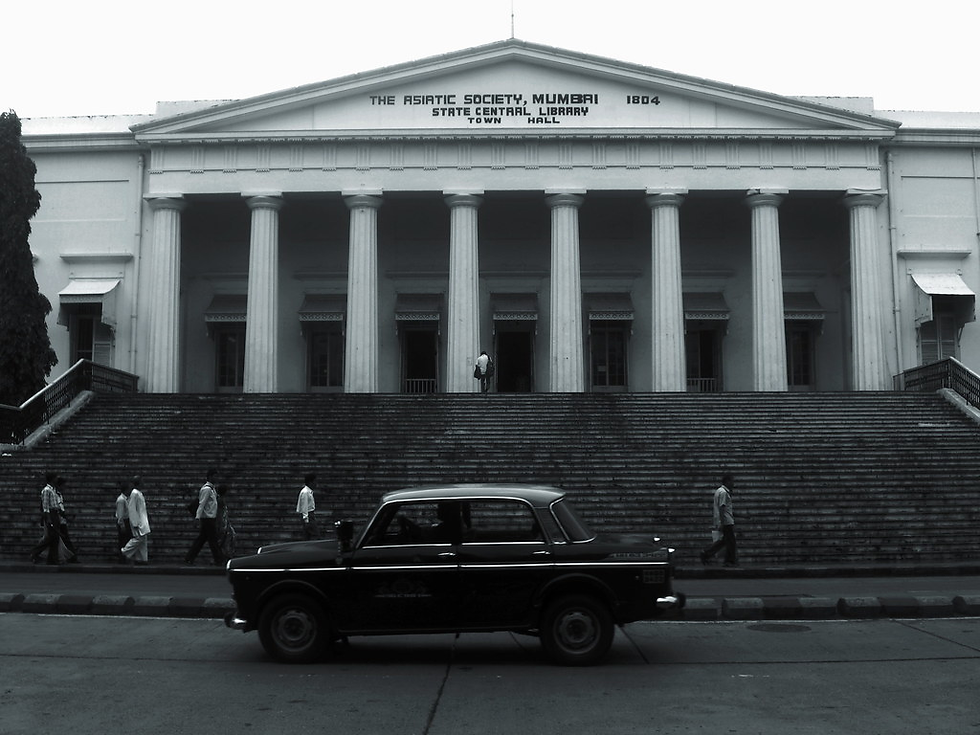
The Asiatic Society of Mumbai is housed in the Town Hall, a heritage building located in the historic Fort area of Mumbai. The building, with its dramatic flight of steps, pedimented portico, and majestic Durbar Hall, is a testament to the Society's colonial history and its connection to the surrounding area. The neighbourhood is a blend of past and present, with landmarks like the Elphinstone Garden, St. Thomas Cathedral, and Flora Fountain adding to its charm. Can you picture yourself strolling through these streets, soaking in the history and culture that surrounds the Asiatic Society?
Conclusion
The Asiatic Society of Mumbai has been at the forefront of intellectual currents in India for over two centuries. Its rich history, diverse collections, and scholarly contributions have made it an integral part of Mumbai's cultural landscape. As it continues to evolve, the Society remains a hub of knowledge and a testament to the power of intellectual pursuit. Imagine the countless minds that have been inspired by the Asiatic Society over the years, and the impact they have had on the world. The Society's story is one of enduring passion for knowledge and a commitment to the pursuit of understanding.


Comments